The Nuclear Notebook

The Nuclear Notebook

The Nuclear Notebook is co-authored by Hans M. Kristensen and Matt Korda and published bi-monthly in the Bulletin of the Atomic Scientists. Each issue provides a snapshot of a nuclear-armed country weapons programs or a global nuclear weapons matter. The Nuclear Notebook is one of the most widely sourced reference materials worldwide for reliable information about the status of nuclear weapons, and it is the most visited section of the Bulletin of the Atomic Scientists web site. Starting in 2020, the Bulletin only offers the Notebooks in web format, but full PDF formats are still available from Taylor & Francis. Because of their importance as a resource to an informed public debate about nuclear weapons, the Nuclear Notebooks are freely available on the Internet.

The most recent Nuclear Notebooks are listed here. Issues dating back to the very first issue in May 1987 can be found here.

Doomsday Clock

The Doomsday Clock

The Bulletin of the Atomic Scientists’ Doomsday Clock is a design that warns the public about how close we are to destroying our world with dangerous technologies of our own making. It is a metaphor, a reminder of the perils we must address if we are to survive on the planet.

When the Doomsday Clock was created in 1947, the greatest danger to humanity came from nuclear weapons, in particular from the prospect that the United States and the Soviet Union were headed for a nuclear arms race. The Bulletin considered possible catastrophic disruptions from climate change in its hand-setting deliberations for the first time in 2007.

Humanity continues to face two simultaneous existential dangers—nuclear war and climate change—that are compounded by a threat multiplier, cyber-enabled information warfare, that undercuts society’s ability to respond. The international security situation is dire, not just because these threats exist, but because world leaders have allowed the international political infrastructure for managing them to erode.

Learn more about the Doomsday Clock.

Nuclear Risk

Nuclear Risk

Articles about nuclear risk, written for the Bulletin of the Atomic Scientists.

Twenty years after 9/11, terrorists could still go nuclear

Twenty years after 9/11, terrorists could still go nuclear

As Americans reeled after the 9/11 attacks 20 years ago, one question was at the front of many minds: Could even worse be coming? If the terrorists who attacked on September 11 had a crude nuclear bomb on the plane, it wouldn’t have been just the twin towers—the whole lower half of Manhattan could have been turned to rubble and ash, with hundreds of thousands dead and injured.

Unfortunately, that possibility was all too real. Investigations after the attacks uncovered focused al Qaeda efforts to get nuclear, biological, and chemical weapons. The nuclear program reported directly to Ayman al-Zawahiri, now the leader of the group, and got as far as carrying out crude but sensible conventional explosive tests for the bomb program in the Afghan desert. Weeks before 9/11, Osama bin Laden and Zawahiri met with two senior Pakistani nuclear scientists and discussed how al Qaeda could get nuclear weapons.

But that was then. Today, both al Qaeda and another major jihadist terror group, the Islamic State, have suffered tremendous blows, with their charismatic leaders dead and many others killed or captured. A US-led counterterrorism coalition destroyed the Islamic State’s geographic caliphate in Iraq and Syria. In recent years, many terrorist attacks have not been much more sophisticated than driving a van into a crowd. Al Qaeda has not managed to carry out a single successful attack in the United States since 9/11. Is a terrorist nuclear attack still something to worry about?

The short answer, unfortunately, is “yes.” The probability of terrorists getting and using a nuclear bomb appears to be low—but the consequences if they did would be so devastating that it is worth beefing up efforts to make sure terrorists never get their hands on a nuclear bomb’s essential ingredients. To see the possibilities, we need to look at motive, capability, and opportunity.

Read the rest of the article here.

Biden should guide missile defense his own way

Biden should guide missile defense his own way

The Biden administration has begun a review of US missile defense policy. The review is part of a broader effort to align defense strategy and posture with the president’s commitment to lead through diplomacy, repair alliances, and rebuild the American economy.

In 2019, Trump declared the “beginning of a new era” in America’s missile defense program. He envisioned an “unrivaled and unmatched” missile defense system with a “simple goal” to defend against “every type of missile attack against any American target.” This decision reversed longstanding US policy to build defenses against emerging nuclear missile threats from North Korea and Iran but not against established nuclear powers. While Trump’s ambitions did not produce immediate changes to US posture and capabilities, he made one of the biggest—and quietest—changes to US declaratory policy in the last two decades.

This quiet change is facing stormy waters. Moscow and Beijing have long claimed US global missile defense plans, including a NATO system in Europe and defenses in East Asia, will eventually target Russia and China, and thus threaten strategic stability. This year, over 60 American national security experts agreed: America’s missile defense system has “accelerated an arms race with Russia and China, leading both adversaries to expand their offensive nuclear weapons programs to counter US missile defenses.” In an open letter, they urged President Joe Biden to “walk us back from the brink now.”

Read the rest of the article here.

The United States needs to cut military spending and shift money to two pressing threats: pandemics and climate change

The United States needs to cut military spending and shift money to two pressing threats: pandemics and climate change

The last year has made one fact quite clear: Spending huge amounts of money on defense has little to no impact on whether a country will be able to effectively protect its people and its economy from a pandemic. The COVID-19 pandemic vividly illuminated the many ways in which the American approach to national security has been fundamentally focused on the wrong threats. As US defense expenditures rose in 2020 to $778 billion—that is, almost 40 percent of total military spending in the world—a third of small US businesses closed either temporarily or forever, and, by June 2021, over 600,000 people in the United States had died from COVID-19.

The Biden administration had an opportunity to redirect the United States’ path away from endless war and all but limitless spending on the Defense Department. That path could and should have centered on the most imminent threats to our security: climate change and potentially pandemic infectious diseases.

But you wouldn’t recognize those as America’s top threats by looking at its spending priorities, which continue to prioritize the best interests of defense contractors over protecting the true national security. For example, the Defense Department has repeatedly accelerated production of weapons systems with immature technology before capabilities have been proven in testing. The end result of this practice included a decade of spending $46 billion on programs that were ultimately canceled. When that immature technology inevitably led to delays and increased costs, those programs took resources from maintaining the weapons and systems the United States already had, contributing, very likely, to preventable accidents. Smart cuts would stop production of major programs like the F-35 Joint Strike Fighter until testing is complete. Proper oversight of the defense budget would also challenge bureaucratic growth that inevitably follows when new entities are created. (One good example is the Space Force, which some in Congress are already criticizing for mismanaging its procurement programs.)

Nuclear spending is another area in which US priorities have flown completely off the rails. Over the course of a single year, the cost estimate for the nuclear weapons activities budget increased by $113 billion. The upcoming Nuclear Posture Review should seriously consider canceling a number of programs. For example, the sea-launched cruise missile is not only destabilizing—an adversary could not tell whether a US submarine-launched cruise missile had a nuclear or conventional warhead—but undermines the Navy’s ability to conduct its conventional missions. Canceling the program would save at least $10 billion over the next 10 years. Plans to modernize land-based intercontinental ballistic missiles could also be curtailed without compromising US national security.

Read the rest of the article here.

Nuclear Notebook: How many nuclear weapons does Pakistan have in 2021?

Nuclear Notebook: How many nuclear weapons does Pakistan have in 2021?

Editor’s note: The Nuclear Notebook is researched and written by Hans M. Kristensen, director of the Nuclear Information Project with the Federation of American Scientists, and Matt Korda, a research associate with the project. The Nuclear Notebook column has been published in the Bulletin of the Atomic Scientists since 1987. This issue’s column examines Pakistan’s nuclear arsenal, which may include approximately 165 warheads. The authors estimate that the country’s stockpile could realistically grow to around 200 by 2025, if the current trend continues. To see all previous Nuclear Notebook columns, click here.

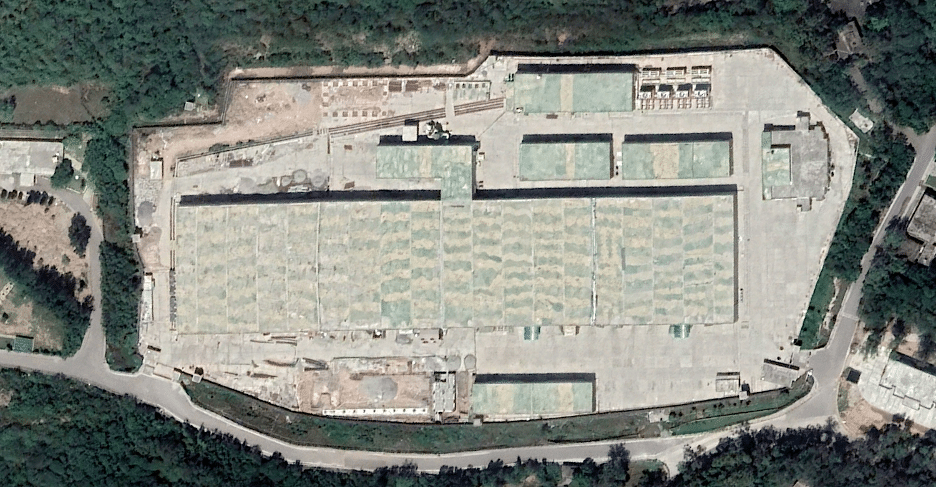
Pakistan continues to expand its nuclear arsenal with more warheads, more delivery systems, and a growing fissile materials production industry. Analysis of a large number of commercial satellite images of Pakistani army garrisons and air force bases shows what appear to be launchers and facilities that might be related to the nuclear forces.

We estimate that Pakistan now has a nuclear weapons stockpile of approximately 165 warheads (See Table 1). The US Defense Intelligence Agency projected in 1999 that Pakistan would have 60 to 80 warheads by 2020 (US Defense Intelligence Agency 1999, 38), but several new weapon systems have been fielded and developed since then, which leads us to the higher estimate.

With several new delivery systems in development, four plutonium production reactors, and an expanding uranium enrichment infrastructure, however, Pakistan’s stockpile has the potential to increase further over the next 10 years. The size of this projected increase will depend on several factors, including how many nuclear-capable launchers Pakistan plans to deploy, how its nuclear strategy evolves, and how much the Indian nuclear arsenal grows. Speculation that Pakistan may become the world’s third-largest nuclear weapon state––with a stockpile of some 350 warheads a decade from now––are, we believe, exaggerated, not least because that would require a buildup two to three times faster than the growth rate over the past two decades. We estimate that the country’s stockpile could more realistically grow to around 200 warheads by 2025, if the current trend continues. But unless India significantly expands its arsenal or further builds up its conventional forces, it seems reasonable to expect that Pakistan’s nuclear arsenal will not continue to grow indefinitely but might begin to level off as its current weapons programs are completed.

Analyzing Pakistan’s nuclear forces is fraught with uncertainty, given that the Pakistani government has never publicly disclosed the size of its arsenal and media sources frequently embellish news stories about nuclear weapons. Therefore, the estimates made in the Nuclear Notebook are based on analysis of Pakistan’s nuclear posture, observations via commercial satellite imagery, previous statements by Western officials, and private conversations with officials.

Read the rest of the article here.

The history of nuclear power’s imagined future: Plutonium’s journey from asset to waste

The history of nuclear power’s imagined future: Plutonium’s journey from asset to waste

Two histories of nuclear power can be recounted. The first is the history of the active present.  It tells, amongst other things, of the technology’s evolution and role in electricity production, its military connections, installed types, capacities and performance of reactors, their fuelling and spent fuel discharges, their accidents, the supplying, operating and regulating institutions, and the involvement of states. The second is the history of the imagined future. It tells of how, at particular moments, nuclear power and much connected with it have been imagined playing out in years, decades, and even centuries ahead.

Plutonium’s history, of each kind, and its legacies are the subject of a recent book by Frank von Hippel, Masafumi Takubo and Jungmin Kang.[1] It is an impressive study of technological struggle and ultimate failure, and of plutonium’s journey from regard as a vital energy asset to an eternally troublesome waste.

Toward heaven or hell?  The conflict over plutonium’s future

Read the rest of the article here.

Image by Department of Energy, Public Domain, Wikipedia Commons

How to limit presidential authority to order the use of nuclear weapons

How to limit presidential authority to order the use of nuclear weapons

In the United States, the president has sole authority to order the use of nuclear weapons, for any reason and at any time. This arrangement is both risky and unnecessary.

The risks are not hypothetical. During the Watergate scandal, President Nixon was drinking heavily and many advisers considered him unstable. During the 1974 impeachment hearings, Nixon told reporters that “I can go back into my office and pick up the telephone and in 25 minutes 70 million people will be dead.” Defense Secretary James Schlesinger reportedly instructed the Joint Chiefs of Staff that “any emergency order coming from the President”—such as a nuclear launch order—should go through him or Secretary of State Henry Kissinger first. But Schlesinger had no legal authority to intervene, and it is not clear what would have happened if Nixon had ordered an attack.

The United States should modify its decision-making procedures to require that one or more officials concur with a presidential order to use nuclear weapons before the military carries it out.

This article, written by UCS members and published in the Bulletin of the Atomic Scientists, outlines the steps to take to ensure more leaders are involved in the decision to launch a nuclear attack.